
Movie Reviews
When Nostalgia Fails the Narrative: A Deep Dive Into Karthi’s ‘Vaa Vaathiyaar’

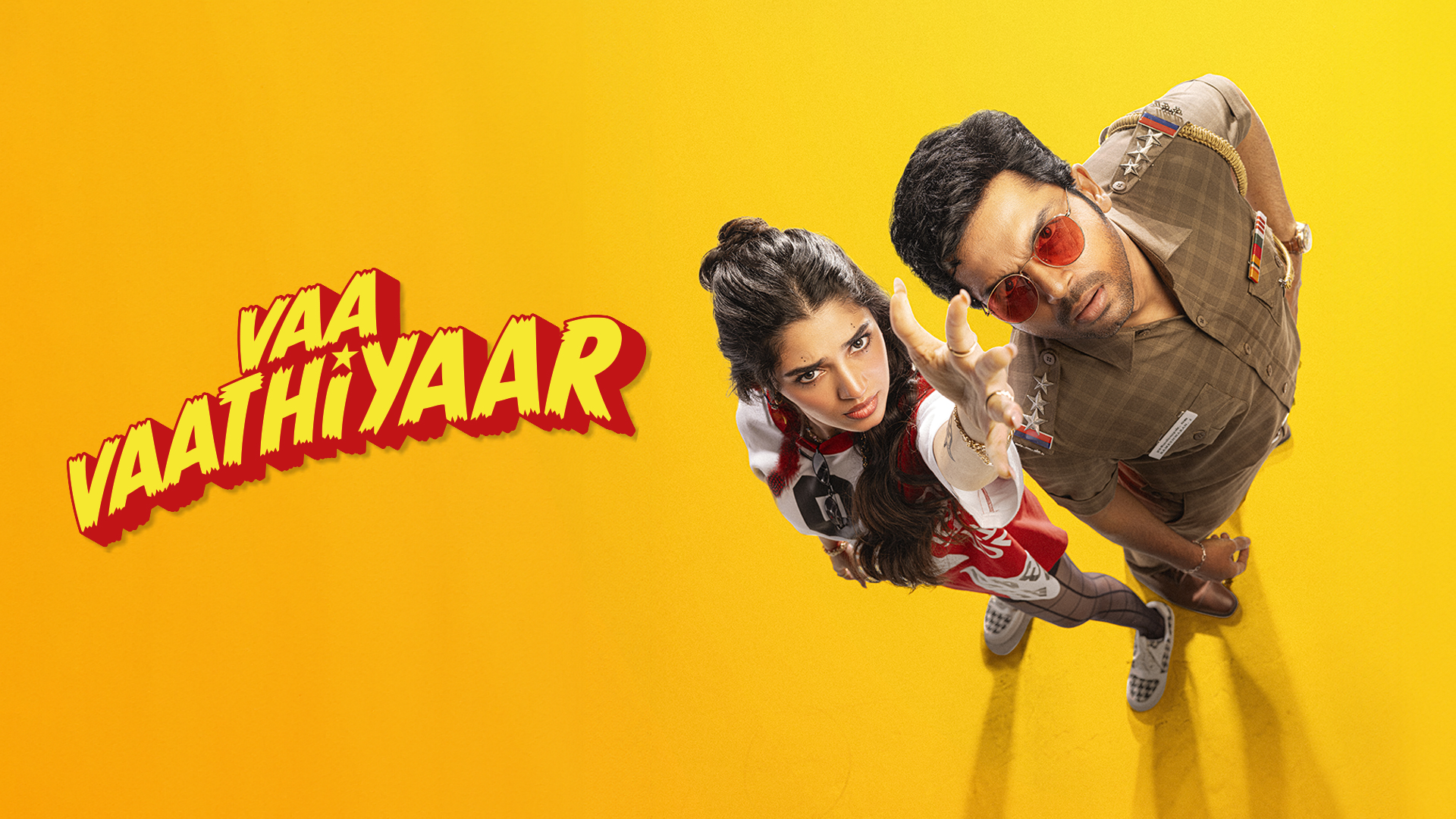
The legacy of late legendary actor and politician M.G. Ramachandran—affectionately called ” VaaVaathiyaar” (Teacher) by millions—remains an untouched sentiment in Tamil Nadu. When director Nalan Kumarasamy announced a collaboration with actor Karthi for an action-comedy fantasy centered on this very icon, expectations skyrocketed. Released on the festive occasion of Pongal on January 14, 2026, Vaa Vaathiyaar promised to blend retro heroism with modern satirical comedy.
Unfortunately, what looked brilliant on paper crumbles into a disjointed, chaotic mess on screen. While the film sparkles with a highly inventive premise and brief flashes of Nalan’s signature dark humor, it ultimately gets crushed under the weight of its own commercial ambitions. It attempts to replicate a psychological vigilante formula but fails to build a coherent emotional anchor.
The Plot: A Cop Caught in a Cinematic Reincarnation
The story takes place in a fictionalized, politically corrupt town called Maasila. Karthi plays Rameshwaran J. (also known as Ramu), a jolly-go-lucky, morally loose sub-inspector at the Puliyur Kottam police station. Ramu is not your average honest cinematic cop. He has mastered the art of cheating cleanly—accepting bribes and bending rules to achieve his personal goals without getting caught.
This bizarre personality stems from his grandfather, Bhoomipichai, played by an earnest Rajkiran. Bhoomipichai is a fanatical devotee of M.G. Ramachandran. He genuinely believes that his grandson is the spiritual reincarnation of the legendary actor. From childhood, Ramu is heavily conditioned to follow the strict public virtues, fighting styles, and Robin Hood ideals of the superstar.
The story takes a sharp turn when a sudden tragedy strikes Ramu’s life. This trauma triggers a deep psychological shift, awakening a vibrant, justice-seeking alter-ego based entirely on the screen persona of the late actor. Armed with a whip and classic retro fighting moves, Ramu begins an eccentric vigilante crusade against the local political mafia, led by a menacing villain played by Sathyaraj.
The Cast and Characters: High Energy Meets Minimal Development
The actors do their best to lift a script that frequently runs out of steam. Karthi carries the entire weight of the production on his shoulders. He shifts effortlessly between the corrupt, casual cop of the first half and the theatrical, larger-than-life hero of the second half. His natural comic timing shines through, making even the weaker scenes watchable.
| Actor | Role | Character Type | Performance Impact |
|---|---|---|---|
| Karthi | Ramu / Vaathiyaar | Corrupt Cop with a Heroic Alter-Ego | Outstanding energy; keeps the film afloat |
| Rajkiran | Bhoomipichai | Ultra-devotee Grandfather | Brings genuine emotional warmth |
| Sathyaraj | Periyasaami | Ruthless, Corrupt Politician | Dependable villainy, but written very weakly |
| Krithi Shetty | Lead Female | Ramu’s Love Interest | Strictly limited to standard commercial elements |
While Karthi delivers an energetic performance, the supporting cast suffers from poor writing. Rajkiran brings a moving, grounded presence to the grandfather role, but his character vanishes from focus as the political plot takes over. Sathyaraj plays a standard, cookie-cutter villain who lacks the psychological depth needed to match Karthi’s complex alter-ego. Meanwhile, Krithi Shetty is restricted to a routine commercial love interest role, offering little value to the core narrative.
Technical Performance: Quirky Melodies and Inconsistent Visuals
On the technical front, the film delivers a mixed bag. Composer Santhosh Narayanan provides a vibrant, experimental background score. His soundtrack includes unique singles like “Uyir Pathikaama” and “Mu Dha La Li,” which brilliantly blend retro Tamil film melodies with modern electronic beats. The music works exceptionally well during the early comedy sequences, adding a distinct flavor to Ramu’s quirky lifestyle.
However, the visual presentation fails to match the musical energy. Cinematographer George C. Williams captures the bright, rural colors beautifully, but the film’s visual style suffers during the crucial action sequences.
The editing by Vetre Krishnan is highly erratic, particularly in the second half. At a running time of 129 minutes, the movie feels both rushed and bloated. Important plot points regarding a political rebel movement are introduced and abandoned without any resolution, leaving audiences disconnected from the main conflict.
Director Nalan Kumarasamy’s Shift Away From Indie Satire
Director Nalan Kumarasamy made a name for himself in Tamil cinema with cult indie comedies like Soodhu Kavvum. He is widely known for his sharp writing, unpredictable screenplays, and dry humor. Viewers going into Vaa Vaathiyaar expecting that specific brand of alternative filmmaking will leave disappointed.
In this project, Nalan attempts to step into the massive world of mainstream masala cinema. The film’s setup is genuinely clever and carries his trademark eccentricity. The idea of using a psychological delusion to pay tribute to a legendary political icon is a bold creative choice.
Unfortunately, Nalan struggles to balance his unique satiric, all voice with the heavy demands of a big-budget star vehicle. Instead of committing fully to a sharp black comedy, the director takes a safe path, incorporating stale commercial tropes, standard corporate-political corruption arcs, and loud dramatic subplots.
Why the Second Half Collapses Into Chaos
The major weakness of Vaa Vaathiyaar lies in its highly uneven second half. The first half moves at a brisk, entertaining pace, building up a fascinating premise before the intermission point. It leaves the audience eager to see how a retro-style hero would navigate a modern world driven by advanced digital surveillance and deep corporate greed.
Sadly, the movie fails to deliver on that premise. Once the M.G. Ramachandran persona takes full control, the narrative shifts into a repetitive series of standard fistfights. The script tries to address serious real-world tragedies, referencing sensitive events like the historic Thoothukudi police firing incident. However, these real-life political issues are handled carelessly, feeling more like a forced screenwriting formula than a meaningful commentary.
The final climax is a chaotic, messy sequence that relies on excessive slow-motion and poorly rendered visual elements. It mimics the style of high-concept psychological thrillers like Anniyan, but lacks the emotional conviction, detailed logic, and slick execution that made those classic blockbusters work.
Directing a Complex Bilingual Release
The production journey of Vaa Vaathiyaar was plagued by significant financial and legal challenges. Produced by K. E. Gnanavel Raja under the Studio Green banner, the film faced multiple release delays due to unpaid loans, resulting in a prolonged legal battle in the Madras High Court. The film finally secured its theatrical window on January 14, 2026, after these financial issues were settled in full.
The rush to release the film is clearly visible in its final cut. This lack of polish extended directly into its digital release on [suspicious link removed] on January 28, 2026.
The film’s domestic and international distribution details highlight its chaotic rollout:
- Tamil Nadu Distribution: Handled locally by Sakthi Film Factory.
- Kerala and Karnataka: Distributed via Sree Gokulam Movies and Think Studios.
- Overseas Markets: Acquired by Phars Film, but hit by major delays in the United States and Canada due to late theater scheduling slots.
- The Telugu Dubbing Crisis: Released as Annagaru Vostaru, the initial Telugu version faced severe backlash from audiences. The dubbing team replaced the verbal M.G. Ramachandran references with nods to legendary actor N. T. Rama Rao, but lazily kept the visual footage of MGR on screen. The film had to be pulled back and re-released in March 2026 with corrected visual replacements.
Final Verdict: An Ambitious Misfire
Vaa Vaathiyaar stands as a clear example of a missed opportunity in modern Tamil cinema. It features a highly dedicated performance from Karthi and a fascinating psychological premise, but it is ultimately brought down by messy writing, tone shifts, and a rushed production schedule. It fails to work as a sharp political satire, and it lacks the focus required to be an effective commercial entertainer.
For audiences interested in seeing Karthi try something completely different, the film offers brief moments of entertainment. However, as a cinematic tribute to the historic legacy of M.G. Ramachandran, this chaotic action-comedy falls entirely short.
Trending – Anaganaga Oka Raju 2026 Movie Review: Story, Cast, Verdict



