
Movie Reviews
Jai Hanuman (2026): What We Know So Far, and What to Watch For

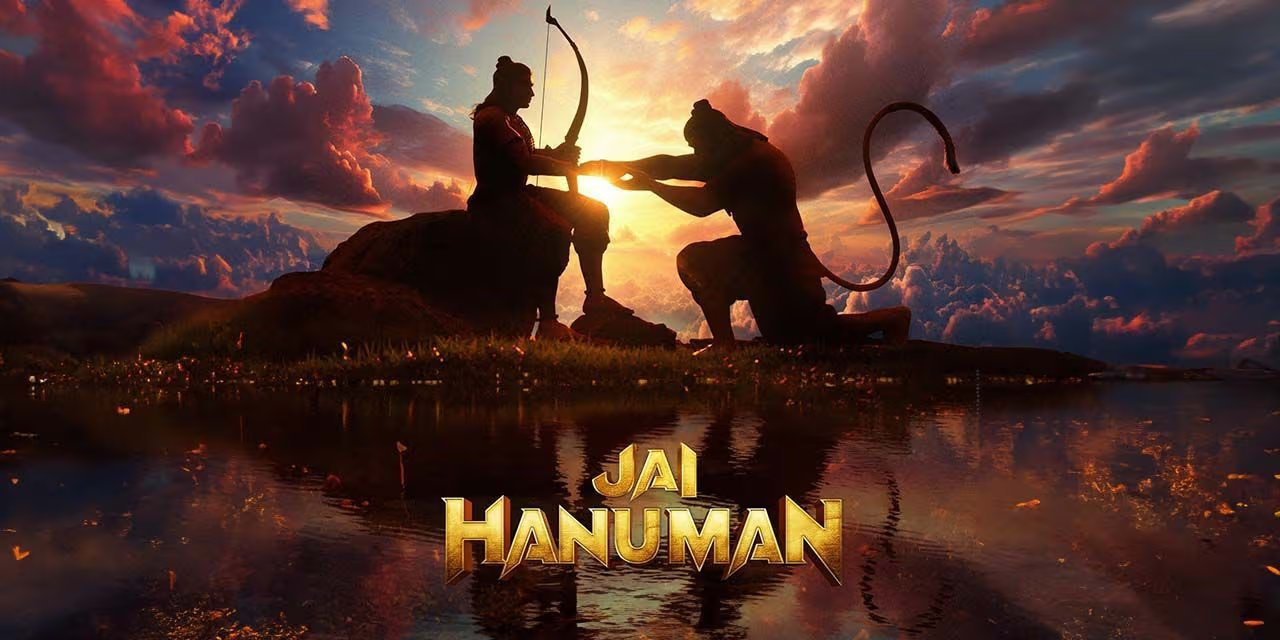
Can a mythological action film feel massive without losing its soul? That’s the question hanging over Jai Hanuman (2026) right now. It had an official launch on February 22, 2026, and reports point to principal photography starting in April 2026.
That means there’s no final trailer to judge, no critic reviews, and no audience score yet. So, think of this as a pre-release review, a clear-headed preview based on what’s confirmed, plus a practical guide for how to judge the film when it finally arrives.
This article covers the basics you can trust, including the director, the core cast, the PVCU connection, and the broad premise (spoiler-free). It also flags what’s not confirmed yet, like a locked release date, ratings, runtime, and box office performance. If you liked Hanu-Man or you enjoy mythological action stories that take devotion seriously, this is the kind of sequel worth keeping on your radar.
Quick facts about Jai Hanuman (2026) in one place
Here’s a tight snapshot of what’s been reported and confirmed so far, without guesswork.
| Detail | Current status (as of March 2026) |
|---|---|
| Director | Prasanth Varma |
| Film universe | Part of the Prasanth Varma Cinematic Universe (PVCU) |
| Lead role | Rishab Shetty as Lord Hanuman |
| Supporting cast | Rana Daggubati reported in a key role (role details not revealed) |
| Special appearance | Teja Sajja reported to appear |
| Launch date | February 22, 2026 (reported launch event and pooja) |
| Production status | Early production, principal photography reported to begin April 2026 |
| Setting | Kaliyug (modern age framing) |
| Release date | Not officially available in the provided data |
| Ratings, reviews, box office | Not applicable pre-release |
The big thing to keep in mind: a lot of online pages show placeholder dates. Until the makers announce it, treat any “confirmed” release date as noise.
Who is making it, and why the PVCU connection matters
Prasanth Varma is the main reason expectations are high. He’s not just directing another standalone mythological film. He’s building a connected series of movies that share the same world and momentum.
In plain terms, the PVCU is meant to work like a franchise where one film can set up the next. Characters can cross paths, story threads can carry over, and the scale can rise with each chapter. Hanu-Man (2024) did the hard part already. It proved audiences will show up for a story that mixes superhero beats with devotion, as long as the emotion feels honest and the spectacle lands.
That shared-universe setup matters for one simple reason: it changes what viewers expect. People won’t judge Jai Hanuman like an isolated retelling. They’ll compare it to what came before, and they’ll look for continuity, escalation, and payoff. Even small choices, like the way powers look on-screen or how faith is framed, can feel “canon” in a universe like this.
So when Jai Hanuman releases, it won’t just be asked to entertain. It’ll be asked to expand.
Cast and characters: what is confirmed, and what is still under wraps
The clearest casting news is also the most important. Rishab Shetty plays Lord Hanuman. That choice stands out because he’s known for performances that feel grounded and physical, not glossy or distant. For a character like Hanuman, that can help. Devotional roles often fail when the actor feels like a statue. They work when the presence feels human, even when the character is divine.
There’s also talk of Rana Daggubati in a key role, but the character details haven’t been revealed in the information available so far. He could be an ally, a threat, or something more complex. Until the makers confirm the role, it’s better to treat it as “reported, not explained.”
Teja Sajja, the face of Hanu-Man, is reported to have a special appearance. That fits the PVCU idea. A brief crossover can connect stories without turning the sequel into fan service.
What’s still unknown is just as important:
- No confirmed full cast list.
- No confirmed character names beyond Hanuman.
- No confirmed villain, motivation, or arc details.
That silence can be smart. With mythological material, a careful reveal helps the film control expectations.
Story setup without spoilers: what the movie seems to be about
Based on current reporting, Jai Hanuman positions itself as a large-scale mythological action epic set in Kaliyug, with the focus on Lord Hanuman directly, not a human “chosen one” borrowing divine power. That’s a major shift in framing.
The early descriptions floating around point to themes like devotion that holds firm under pressure, and the idea of silence as strength, meaning power that stays contained until the moment demands it. If that theme makes it into the final film, it could give the action more meaning. A punch is just a punch, unless the story earns it.
For a quick reference on the film’s launch and early production reporting, see The Hindu’s production update.
At this stage, though, there are boundaries on what anyone can “review.” There’s no official plot summary with scene-level detail, and there shouldn’t be. Still, it’s fair to set expectations about the type of experience it seems to promise:
- More mythic scale than Hanu-Man, because the central figure is the deity.
- Bigger action set pieces, because Hanuman’s abilities demand it.
- A devotional tone, because audiences expect reverence in portrayal.
A good mythological action movie doesn’t lecture you. It makes you feel something first, then lets the message land naturally.
If Jai Hanuman keeps that balance, it can appeal to both fans who want spectacle and viewers who want spiritual sincerity.
How Jai Hanuman differs from Hanu Man
The simplest comparison is also the most useful.
Hanu-Man followed Hanumanthu, a human who gains Hanuman-like powers. That structure is familiar because it uses a superhero “origin” pattern. The audience learns the rules as the hero learns them. Humor fits more easily, and the stakes can start small.
Jai Hanuman shifts the center to Lord Hanuman himself. That changes the tone right away. A deity-led story often feels more symbolic, more elevated, and more careful with its emotional notes. It also puts limits on certain tropes. You can’t treat the character like an underdog learning to throw his first punch. The writing has to find tension in other ways, like moral tests, duty, restraint, and the cost of intervention.
It also raises the bar for respect. Viewers can forgive a few rough edges in a small-town superhero origin. They’re less forgiving when the portrayal feels casual or showy for the wrong reasons.
What the Kaliyug setting could mean for themes and conflict
Kaliyug, in storytelling terms, is a mirror. It lets filmmakers hold up modern life and ask what’s changed, and what hasn’t.
A modern-era setting can sharpen themes like:
- Faith vs doubt: Not as a debate, but as a lived struggle.
- Noise vs silence: A world full of distractions, and a hero defined by purpose.
- Power vs restraint: Having strength is easy, choosing when not to use it is harder.
The danger is also clear. A Kaliyug framing can become too broad, or too preachy, if the script turns into a speech. The stronger option is to keep it personal. Show the pressure, then let the audience connect the dots.
If the film takes that route, it can feel current without feeling trendy. That’s the sweet spot for mythological cinema that wants to speak to today’s viewers.
What will make or break the film: action, VFX, and devotion on screen
When people search “Jai Hanuman movie review,” they’re usually looking for a verdict. Right now, the best service a review-style preview can offer is a clear yardstick.
The yardstick starts with Hanu-Man (2024). That film earned a reputation for strong audience reactions, especially around VFX moments and devotional highs, even with visible limitations. It also showed that viewers will meet this universe halfway if the heart is in the right place.
Jai Hanuman faces a higher bar, because Hanuman on-screen isn’t just “super strong.” He’s iconic. The visuals, sound design, action rhythm, and emotional tone all have to line up, or the illusion breaks.
Here are the big criteria that will likely decide the film’s reception in the US and beyond:
- Action clarity: Can you track where characters are, and what changed in the fight?
- VFX believability: Do the effects match lighting and scale, or do they float?
- Emotional anchor: Does the story build feeling before the big moments?
- Respectful tone: Does the film earn chants and crescendos, or force them?
In other words, spectacle can open the door, but sincerity keeps people seated.
VFX and scale: the big challenge for a Hanuman-led epic
Hanuman stories demand visuals that are hard to fake. Flight, strength, speed, and larger-than-life movement can look amazing, or they can look like a video cutscene. The difference usually comes down to consistency.
When you watch the first proper trailer, keep an eye on a few simple things:
- Lighting match: Do CGI elements share the same light as the real set?
- Weight and impact: Do landings feel heavy, or do they look floaty?
- Shot length: Do key moments hold long enough to feel real?
- Overuse: Do effects support emotion, or replace it?
Scale isn’t only about bigger frames. It’s also about choosing when to go quiet. A restrained scene can make the next spectacle feel twice as powerful.
For readers who want a quick refresher on the foundation of this universe, Hanu-Man’s film background helps explain what the first installment established.
Tone and respect: balancing mass action with devotional storytelling
Mass action cinema runs on energy. Devotional storytelling runs on sincerity. When a movie tries to do both, the tone becomes the fragile part.
Audiences usually respond well when the film:
- treats prayer and belief as felt experience, not a punchline,
- keeps humor in side moments, without turning sacred beats into skits,
- builds emotion through relationships and choices, not speeches,
- makes action feel connected to duty and protection, not just winning.
The most common pitfalls are easy to spot once you look for them. Forced jokes can puncture the mood. Loud messaging can feel like scolding. Action that has no emotional reason can feel like filler, no matter how expensive it looks.
If Jai Hanuman keeps its focus on meaning, even the biggest set pieces can feel earned. If it chases hype first, the film may still open strong, but word of mouth could soften fast.
Conclusion: should you be excited for Jai Hanuman (2026)?
As of March 2026, the most honest take is simple. Jai Hanuman looks promising on paper, with Prasanth Varma directing and Rishab Shetty playing Lord Hanuman, plus a clear PVCU connection. At the same time, key details remain unknown, including an officially confirmed release date, ratings, full reviews, and box office results.
If you’re a PVCU follower, enjoyed Hanu-Man, or you like mythological action that treats devotion with care, this is a film to track. Until trailers and a date drop, excitement should come with patience.
When new promos arrive, watch for these signals:
- VFX consistency in daylight and wide shots
- Action clarity that doesn’t rely on fast cuts
- A respectful tone that avoids preachy scenes
- A strong emotional core that earns the big moments
The first real trailer will tell the truth. When it lands, does it feel like spectacle with meaning, or just noise with a familiar name?



