
Movie Reviews
The Kerala Story 2 Movie Review (2026)

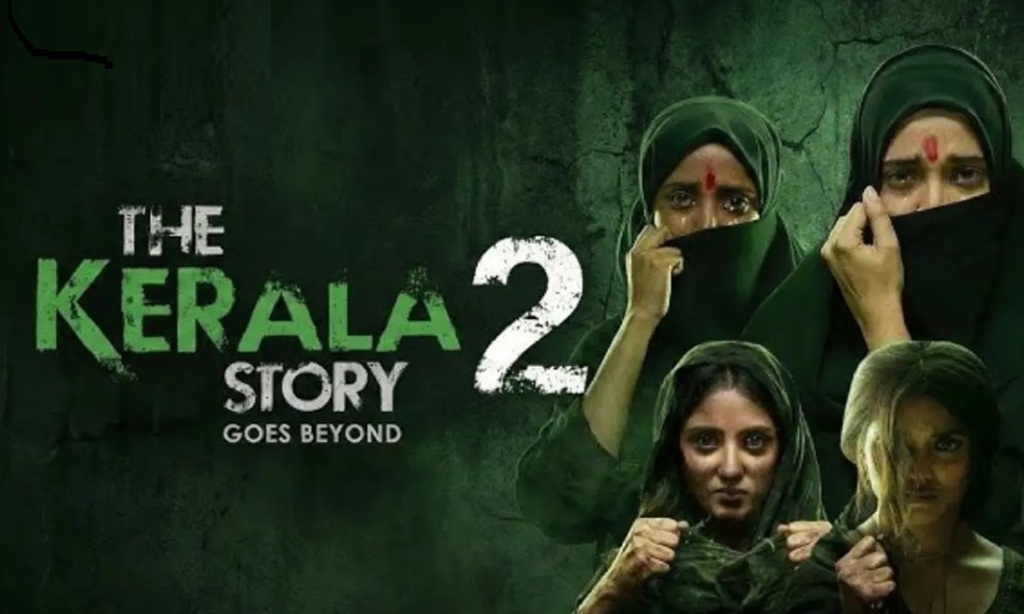
If you’re searching for a straight answer on The Kerala Story 2 before you book tickets, here’s the key detail first. As of 26 Feb 2026, the film’s planned 27 Feb 2026 release has been stayed by the Kerala High Court, so there are no verified critic scores, audience ratings, or box office figures to judge it by yet.
That means this piece reads as a trailer-based review, built on what’s officially out there so far. The focus stays on the trailer’s story beats, the announced premise, the confirmed cast, and the stated runtime, alongside the public controversy that’s already shaping how people view the film.
From the promos, the film continues the forced conversion narrative, widening the scope beyond Kerala and leaning into urgent, confrontational messaging. The tone looks intense and emotional, and the marketing positions it as a warning and a call to resist, rather than a quiet drama.
In the sections ahead, you’ll get a fair look at the story and themes shown so far, the craft (tone, performances, direction) as seen in promos, who may want to watch and who may not, and what to check the moment it finally releases.
Quick facts about The Kerala Story 2: title, team, release status, and what’s confirmed
If you’ve seen headlines flying around, here’s the clean version. The Kerala Story 2: Goes Beyond is officially positioned as a follow-up to the 2023 film, with a similar warning-style tone in the promos. It also has a major real-world update that matters more than any trailer reaction: the Kerala High Court has stayed the release, so the planned cinema date is no longer firm.
To keep things simple, this fact box captures what’s confirmed and widely reported right now:
- Reported title: The Kerala Story 2: Goes Beyond
- Director: Kamakhya Narayan Singh
- Main cast (reported): Ulka Gupta, Aditi Bhatia, Aishwarya Ojha
- Reported runtime: about 2 hours 20 minutes
- Trailer date: 17 Feb 2026, posted by PVR on YouTube
- Planned theatrical release: 27 Feb 2026
- Current status: Release stayed by the Kerala High Court on 25 Feb 2026, with the order reserved as of 26 Feb 2026 (so the court has not issued its final decision yet)
For ongoing reporting on the stay, see coverage from Onmanorama on the High Court order.
Where it sits in the series and what you need to know from the first film
This film is framed as a sequel to the 2023 Hindi release The Kerala Story. You don’t need to have watched the first film to follow the basic setup, because the marketing sells the same core idea: young women get drawn into relationships that turn into coercion, control, and alleged forced conversion.
Where the sequel seems to shift gears is in scope. Reports say the new story follows three young women from different Indian states, not just Kerala. In other words, the title still points to Kerala, but the narrative appears to widen beyond one place. Think of it like a second chapter that keeps the same argument, but uses a broader canvas and new faces to make it feel bigger.
If you want a quick snapshot of who’s attached and what’s been announced, Business Standard’s roundup of cast and release details is a useful reference.
The release statement explained in plain English: what happened and why it matters.
Here’s what the legal situation means without the legal jargon. Petitions were filed asking the Kerala High Court to step in, raising concerns that the film could fuel community tension and harm Kerala’s image. The challenge also targets the film’s certification, which is why the case matters even before the first show begins.
The court’s approach was also telling. Reporting around the hearings says the judge planned to watch the film (or at least considered a screening) before deciding, because claims about impact and portrayal often depend on what’s actually on screen. Until the court issues its final order, the makers cannot go ahead withthe release in the normal way.
For viewers, a stay works like a padlock on the cinema door:
- Tickets can’t be relied on, even if listings appear briefly.
- The release date turns into a question mark, because the film can be pushed back at short notice.
- Reviews aren’t available yet, because critics and audiences can’t watch it through a standard theatrical run.
The key point is simple: until the stay lifts (or conditions are set), there’s no full public release, so any “review” online is really a reaction to promos, not the finished film.
Story and themes shown so far: what the trailer suggests, and what is still unclear
From the trailer alone, The Kerala Story 2: Goes Beyond looks built around three parallel stories that follow a similar pattern. First, it’s romance and reassurance, then it’s secrecy and pressure. The promo pushes a clear warning tone, but it still leaves big gaps about how the full film treats its characters, its claims, and its context.
What you can take from the marketing is the emotional direction. It wants you to feel the slow squeeze of control, like a door closing one click at a time. What you can’t take yet is the full picture, because a trailer can’t show the consequences with any honesty, or the story with any balance.
The basic set-up: three young women, love stories, and lives that tighten like a trap
The trailer suggests the film follows three young Hindu women across different states, each pulled into a relationship that starts with choice and comfort. At first, the men come off as attentive and patient. Families stay in the background, and the girls appear hopeful, even stubbornly optimistic.
Then the mood shifts. The trailer implies a move from open affection to rules, secrets, and emotional pressure. Small asks become tests of loyalty. Calls get monitored, meetings get hidden, and the women seem cut off from the people who would normally step in. It’s not shown as a single dramatic moment, but as a creeping change that turns love into a cage.
One trailer beat, widely reported, is a name and identity reveal, where a womanrealizess the man she trusted lied about who he is. That moment is framed as the crack in the mirror; after it breaks, nothing looks the same again. As The Times of India’s trailer summary describes it, the plot hinges on deceptive romance followed by pressure to abandon beliefs.
Even so, the promo keeps key facts off-screen. You don’t yet know how much time the film gives to the women’s inner lives, how they fight back, or whether anyone around them acts with care rather than anger.
What the film seems to be saying, and the lines that signal its message
The trailer doesn’t hide its intent. It signals a broad theme with slogans like “The story goes beyond”, and it leans into a fight-back tone. One line used in promotion, as reported in coverage, is along the lines of “They targeted our daughters. This time, we do not stay silent.” That wording matters because it sets the film up as a warning first, and a drama second.
It also includes provocative dialogue and cultural flashpoints, including a claim framed as a national warning about the country’s future. The overall pitch is that these are not isolated love stories, but a pattern, with families, police, and society pulled into the fallout. If you want a quick sense of how the promo is being framed in news coverage, The Economic Times on the trailer controversy captures the divided reaction.
Message-driven films can work when the script stays precise. They land best when characters feel like people, not props, and when cause-and-effect is shown, not shouted. On the other hand, if scenes exist mainly to prove a point, the emotion can start to feel like a lecture. Based on the trailer, the film appears to argue hard, so the writing will need real restraint to keep it human.
A strong message doesn’t replace storytelling. It only works when the story still breathes.
Questions worth asking while watching (if and when it releases)
If the film releases later, it helps to watch with a few grounded checks in mind, especially because the trailer sells certainty while the full context is still unknown.
Here’s a quick checklist to keep your footing:
- Does it show multiple viewpoints? Or does it only show one angle, then rush to judgment?
- Does it separate individuals from communities? A story about specific people should not paint entire groups with one brush.
- Does it provide context? For example, do you learn about backgrounds, choices, and constraints, or only the most shocking beats?
- Does it rely on fear beats? Notice if tension comes from character truth, or from repeated threats and slogans.
- How does it treat victims’ choices? Does it show grooming and coercion carefully, without blaming the women for trusting someone?
- Do characters have depth beyond being symbols? Pay attention to whether the women have goals, friendships, and voices, not just suffering.
The biggest unknown is still the foundation. Are these stories presented as grounded cases, composites, or fiction inspired by headlines? Until the film shows its sourcing, its framing, and its full arcs, the trailer remains a loud argument with many missing pages.
How it looks and sounds: direction, acting, pacing, and trailer craft
A trailer can’t prove a film’s full balance, but it can show you its method. With The Kerala Story 2: Goes Beyond, the method looks loud, urgent, and designed to provoke a strong response fast. The visuals feel stripped of comfort, the sound pushes you forward, and the edit keeps closing doors behind you so you can’t step back and reflect.
What stands out most is how the promo frames the story as a warning first and a drama second. That choice can be gripping if the full film stays specific and character-led. It can also feel like a pressure tactic if the feature relies on speeches and shock beats to do the heavy lifting.
Direction and tone: intense, urgent, and built for a strong reaction
From the trailer, Kamakhya Narayan Singh’s approach looks high-stakes and confrontational. It opens with an alarming statement, then stacks scene on scene to make the threat feel immediate. You don’t get much stillness. Instead, the promo keeps escalating, like a siren that ramps up because it assumes you might stop listening.
The direction also seems to favour big dialogue moments. These are lines that are meant to land like punches, not whispers. The confrontations read clearly on screen: family arguments, police station visits, threats, and moral stand-offs. It’s cinema as a rallying cry.
Visually, the colour palette in the promo leans dim and muted, with a lot of indoor shadows and harsh, practical lighting. Police stations and cramped rooms add to the feeling of being watched or cornered. That choice matches the story being sold, but it can also narrow the emotional range. If every scene arrives at the same temperature, the film risks feeling one-note by the halfway mark.
This kind of direction keeps you hooked because it never loosens its grip. The trade-off is that it may leave little breathing room for context, doubt, or human complexity.
If the full cut wants to feel credible rather than purely provocative, it needs contrast. Even a brief calm scene can make the danger feel sharper later.
Performances: Do the leads feel like real people or just plot devices?
The trailer gives short, high-pressure glimpses of Ulka Gupta, Aditi Bhatia, and Aishwarya Ojha, mostly in fear beats and survival mode. You see panic, disbelief, and flashes of defiance. That’s a tough ask for any performer, because trailers often select the most extreme expressions, not the quiet choices that build a person.
For the acting to land over a reported 2-hour 20-minute runtime, the film will need to sell the early normal as carefully as the later horror. The most convincing version of this story would show:
- Believable relationships early on, including warmth and small, ordinary details (friends, routines, private jokes).
- Clear inner conflict, where a character’s choices feel messy but understandable, not just pushed by the plot.
- Consistency, so the women don’t switch emotions simply because the next set-piece needs a reaction.
The biggest risk, based on the promo, is that the women could be framed mainly as symbols of harm, while the men become fixed “villains” without real psychology. When that happens, performances can’t fully breathe. They end up hitting marks rather than building lives.
Some coverage of the trailer’s cast and set-up highlights the sequel’s wider scope across states, which makes those personal foundations even more important. See CNBC TV18’s trailer summary for how the promo positions the three leads.
Music, editing, and the trailer’s persuasion tactics
The trailer’s craft uses familiar, effective tools: a rising score, rapid cutting, and slogan-like lines placed to spike emotion. The edit doesn’t just tell you what happens, it tells you what to feel, and when. Each time the tension might settle, the promo jumps to a sharper image or a louder line.
A few tactics stand out:
- Music swells to “prove” importance: the background score climbs under warnings and confrontations, so even a single line can sound historic.
- Quick cuts create certainty: short flashes of police, family conflict, and danger imply a connected pattern, even when scenes may be from different points in the film.
- Cliffhanger imagery keeps you chasing: the promo withholds resolution, then drops a last beat designed to linger.
Sound design also plays a role. Dialogue hits hard, then the score rushes in to underline it. Combined with the darker grading, it pushes a serious, almost news-bulletin mood.
None of this is automatically bad. Trailer persuasion is part of the job. Still, these choices shape expectations in a specific way: viewers go in ready for a shock-driven message film, not a measured drama. If the feature delivers layered character scenes and earns its emotion, the trailer will feel powerful in hindsight. If it relies on repeated crescendos and speech-like confrontations, the same trailer craft may feel manipulative once you’re sitting through the full story.
The controversy and the conversation: how to approach this film responsibly as a viewer
When a film is sold as a warning, people tend to treat it like evidence. That’s where things get messy. With The Kerala Story 2: Goes Beyond, the trailer and early promo messaging have already pushed the debate into politics, identity, and public safety, even before most people have seen the full cut.
If you plan to watch it (whenever the stay lifts), it helps to separate two different questions: Is the film allowed to exist? And is the film being fair, careful, and honest with its audience? You can support free expression while still expecting responsibility, especially when the subject can raise fear or anger quickly.
Why people are upset: portrayal of Kerala, fear of stereotyping, and social impact
The core worry is simple: a mainstream film can shape opinions fast, especially for viewers who don’t know the place, the people, or the wider context. Once a strong image lands, it sticks. That’s why the title, the marketing tone, and the trailer’s themes have drawn such strong pushback.
From the promo content, critics say the film links Kerala to terrorism, forced conversion, and organised targeting of women. Petitioners and commentators argue that this framing risks painting a whole state with one brush and that it can create suspicion towards ordinary people who have nothing to do with the story on screen. The fear is not only about offence, but about real-world knock-on effects: stigma, harassment, and heightened tension in day-to-day life.
It also doesn’t help that trailers are built for impact, not balance. A two-minute promo can feel like a verdict, even when it’s only a highlight reel of the most heated moments. As reported in coverage of the case, petitions have argued that the film’s framing could harm Kerala’s image and disturb public order, which is part of why the release ended up in court in the first place (see Onmanorama’s report on the High Court halting release).
One more thing matters here. You can talk about grooming, coercion, and women’s safety without turning entire communities into suspects. As a viewer, it’s worth holding the film to that standard.
Censorship vs accountability: what certification can and cannot guarantee
A lot of people hear “certified” and assume “verified”. That’s not how it works.
Reports say the film received a U/A certificate from India’s Central Board of Film Certification (CBFC). In practical terms, U/A usually means it’s cleared for public viewing, but children should watch with parental guidance. It is closer to “family viewing with guidance” than “adults only”. It’s a signal about suitability, not a stamp that every claim in the film is fact-checked.
So what can certification do? It can require cuts, disclaimers, or changes, and it can classify who the film is appropriate for. What it cannot do is guarantee that a narrative is fair, complete, or supported by evidence in the way a documentary would be expected to show.
That’s also why court action can still happen even after certification. If petitioners argue that a release could cause public harm (for example, by inflaming tension or damaging reputations), courts can step in while they hear the challenge. In this case, the Kerala High Court issued notices, and the release was stayed while petitions against the certification were considered, as covered by LiveLaw’s report on the plea challenging certification.
In short, certified does not mean proven, and controversial does not automatically mean banned. The responsible lane sits in the middle: allow art, question claims.
A simple viewer checklist for sensitive, political films
If you choose to watch The Kerala Story 2, a little discipline goes a long way. Think of it like handling a sharp tool. You can use it, but you shouldn’t swing it around in a crowd.
Here’s a practical way to stay grounded:
- Check multiple news sources first (or after). Look for straight reporting on what the petitions allege, what the makers claim, and what the court has actually done. Avoid posts that only show rage clips.
- Watch the full film before judging. Trailers are designed to provoke. Even the court discussions highlighted how hard it is to decide impact based on short promo material (see The Indian Express coverage of the certification challenge).
- Look for disclaimers and framing. Does the film clearly say what is fiction, what is inspired, and what is claimed as true? If it uses “true events” style language, ask what it points to.
- Don’t treat it like a documentary. A narrative film can be emotionally “true” to its makers, while still being selective, simplified, or slanted.
- Be careful on social media. Don’t share inflammatory clips without context. A ten-second moment can turn into a weapon when it’s stripped of surrounding scenes.
- Talk about it without targeting people. Criticise the film’s choices, writing, and evidence. Don’t generalise about any community.
If a film leaves you angry, pause before you post. Anger spreads faster than context.
Finally, if the subject genuinely concerns you, consider backing real-world help for women’s safety and rights, regardless of politics. Donate locally, support survivor services, or volunteer time. That keeps your response rooted in something practical, not just online heat.
Conclusion
Right now, any Kerala Story 2 movie review has to stay provisional, because the Kerala High Court has held up the planned 27 Feb 2026 release and reserved its order. That also means there are no verified critic ratings, audience scores, or box office numbers to weigh up yet.
Based on the trailer and confirmed details, The Kerala Story 2: Goes Beyond looks intense, message-first, and built around three young women who lose freedom step by step. The promo points at grooming, control, and forced conversion, and it pushes a fight-back mood rather than quiet observation. At the same time, it carries a high risk of being divisive, because the marketing paints in broad strokes, and the title keeps Kerala at the centre of a national argument.
If the full film gives its characters room to breathe and shows clear context, it could land as a grim, focused cautionary drama. If it leans on slogans and shock beats, it may feel more like a statement than a story, and that is where fairness matters most.
Thanks for reading. Share your take once you have watched it, especially if you live in Kerala or know the subject well.
Post-release updates, I will add
- Full plot clarity and what the film claims as fact
- Performances across the full runtime (about 2 hours 20 minutes)
- Writing quality and pacing
- Depiction fairness and how it treats communities
- Verified reviews and audience response



