Movie Reviews
Trimukha: Shivani Rathod’s CID Hunt, and the Three-Faced Mask Murders


A city locks its doors early when the Trimukha murders hit the news, each scene marked by a three-faced mask and the same chilling pattern. At the center of it all is CID officer Shivani Rathod, who’s running out of time as the body count rises and leads keep collapsing.
Released January 30, 2026, Trimukha is a Telugu-language thriller that frames its mystery around a tense push and pull between rationalism and what looks supernatural. That conflict isn’t just mood, it shapes every clue and every false turn, especially when fear starts to look like proof.
In this post, you’ll get a spoiler-light story setup, a quick guide to the key characters, what works and what doesn’t, and who’s most likely to enjoy the film. If you like investigative thrillers with twists and debates about belief, this one’s worth your attention.
The core story: Shivani Rathod vs the three-faced masked killer
At its heart, Trimukha runs on a simple fear: a killer can turn a city into a rumor mill overnight. The murders don’t just stack up, they start to reshape daily life, from how people commute to what they whisper about after dark. As the case spirals, CID officer Shivani Rathod takes point, trying to keep the work logical while the clues keep pointing somewhere stranger.
The result is a chase where every “almost” hurts. Each lead that slips away buys the killer more time, and buys the public less peace.
What are the “Trimukha” murders, and why the mask matters
The “Trimukha” murders get their name from the killer’s signature calling card: a three-faced mask that shows up around the crime scenes like a stamp. It’s not used as a random scare prop. Instead, it creates a pattern that the media can name, repeat, and spread, which quickly turns one case into a full-blown panic.

What makes the mask matter is how it warps the investigation. It invites misdirection because anyone could place a mask to fake a connection. It also pushes symbolism into the evidence, and symbolism is slippery in a police file. Three faces can mean multiple suspects, multiple motives, or a killer who wants the cops to chase three separate stories at once.
That’s where the real threat lands. Beyond the crimes themselves, the mask triggers a copycat fear. When the city starts to believe the mask equals death, the killer controls the mood. That public pressure forces CID to act fast, sometimes before the team is ready, which is exactly when mistakes happen. If you want a quick, spoiler-light snapshot of the setup, Trimukha on Moviebuff captures the core hook.
Shivani Rathod as a lead: calm under pressure, but pushed to the edge
Shivani Rathod, played by Sunny Leone, reads like the person you want in charge when a case gets loud. She stays measured in briefings, keeps her team moving, and treats each new tip like a piece of math. First verify it, then act. That discipline matters because the Trimukha killings tempt everyone to jump at shadows.
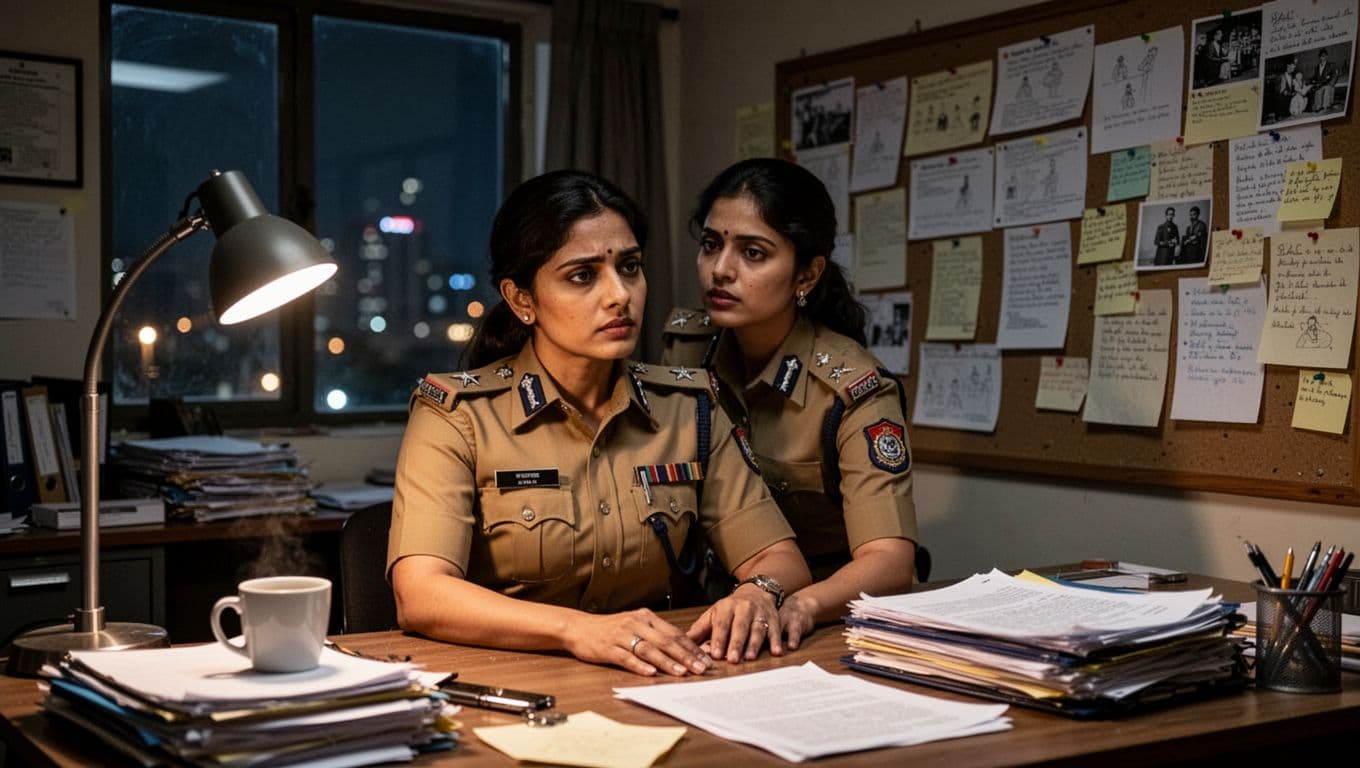
Still, calm doesn’t mean untouched. As the killer keeps staying a step ahead, Shivani has to make decisions that carry a cost. Do you pull resources from a weak lead to guard the next likely target, or do you chase the lead and risk being late again? Either choice can haunt you.
The pressure in Trimukha isn’t only “catch the killer.” It’s also “don’t lose the city while you try.”
That emotional weight shows up in small moments: longer nights, shorter tempers, and a growing sense that the killer isn’t just committing crimes, they’re testing Shivani’s limits.
The investigation tension: clues, red herrings, and ticking-clock moments
Trimukha builds suspense the way real cases often feel, with progress that arrives in uneven bursts. A witness statement sounds solid, then falls apart under one missing detail. A late-night stakeout feels routine, until a single movement flips the scene. Even when the team “gets something,” it often opens two more questions.
A lot of that tension comes from the film’s non-linear storytelling at points. It will jump between timelines or parallel threads, so you have to watch faces, locations, and small objects closely. The payoff is that you experience the case like Shivani does, piecing together fragments while the clock keeps ticking.
To keep things spoiler-light, it helps to think of the investigation in three constant forces pushing against each other:
- Clues that look too perfect: the kind that feel planted, because they probably are.
- Red herrings that waste manpower: tips that pull CID away from what matters most.
- Time pressure that never eases: because each delay raises the chance the pattern repeats.
For more background on how the film frames that mix of crime and belief, The Hans India’s overview lines up with what you see on screen: a case that keeps turning just when you think you’ve got it sorted.
The second track: Dr. Yogi’s “paranormal” cases collide with the murders
While Shivani Rathod works the streets, Trimukha runs a second investigation in parallel, one that starts in labs and lecture rooms instead of crime scenes. It’s a smart move because it shows how panic spreads: one rumor becomes “evidence,” and soon the city treats fear like a fact.
Dr. Yogi’s track is less about jump scares and more like watching someone solve a tricky logic grid. He takes “haunted” stories seriously only as claims to test, not truths to accept. That mindset becomes important once the masked murders start pulling public attention in every direction.
Who is Dr. Yogi, and what does he bring to the story
Dr. Yogi, played by Yogesh Kalle (his acting debut), enters the film as a scientist who doesn’t buy ghost stories. He’s the guy who walks into a room everyone avoids, flips on the light, and asks what the simple explanation is. In a city already on edge from the Trimukha killings, that logic-first posture feels almost rebellious.
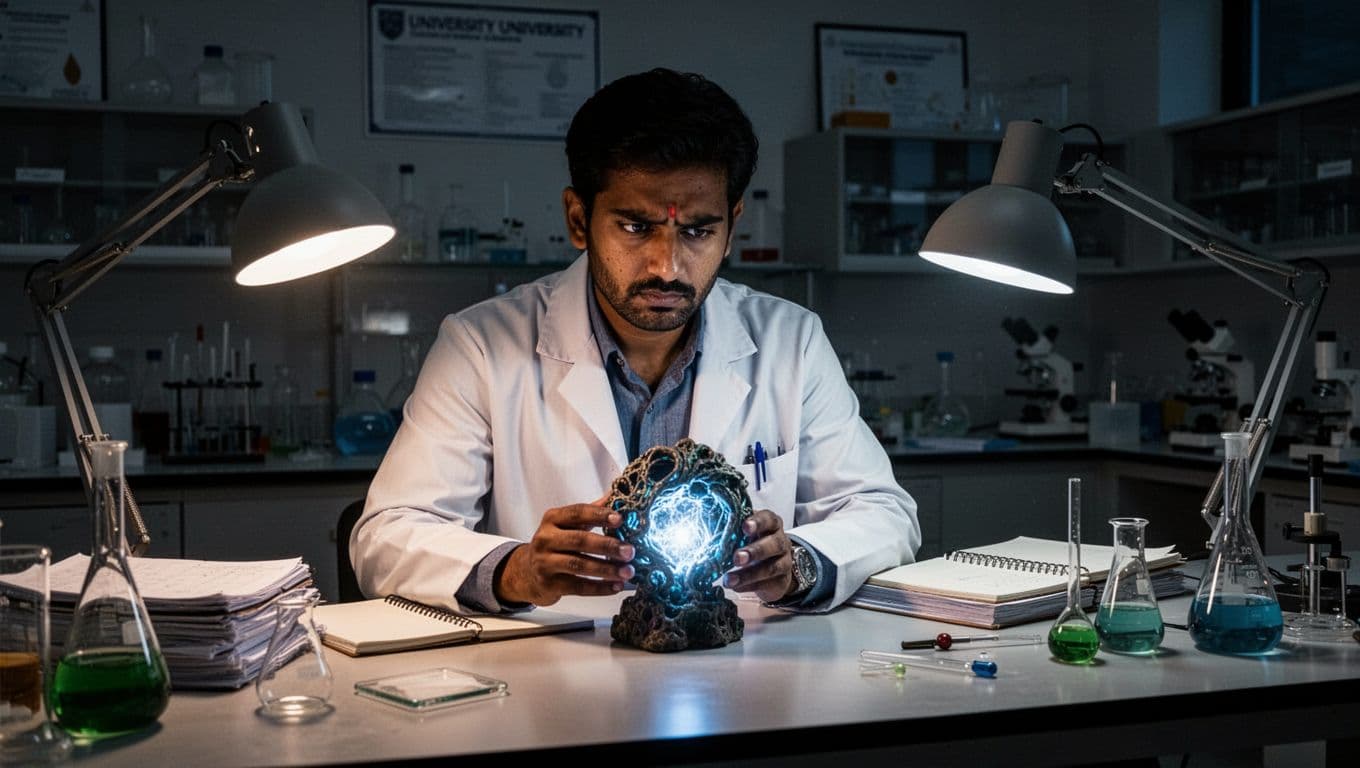
What he brings is a steady method. Instead of reacting to creepy details, he treats them like variables. What can be measured? What can be repeated? What changes when you remove an audience? That approach creates a clean contrast with the public mood, where people start “connecting” unrelated events because they want an answer fast.
If you like puzzle-solving, Yogi is easy to follow because he thinks out loud in a way that feels practical:
- He separates story from proof, so rumors don’t automatically become leads.
- He looks for the mechanism, like wires, timing, and human behavior.
- He expects a trick, because fear is often someone’s tool, not a force of nature.
The mentor figure and the “prove it’s not supernatural” challenge
Yogi doesn’t operate in a vacuum. His mentor professor, played by Aditya Srivastav, pushes him into the uncomfortable space between confidence and humility. The professor’s challenge is simple and strict: take three eerie cases that people insist are paranormal, and prove they’re fake with real testing, not just opinions.
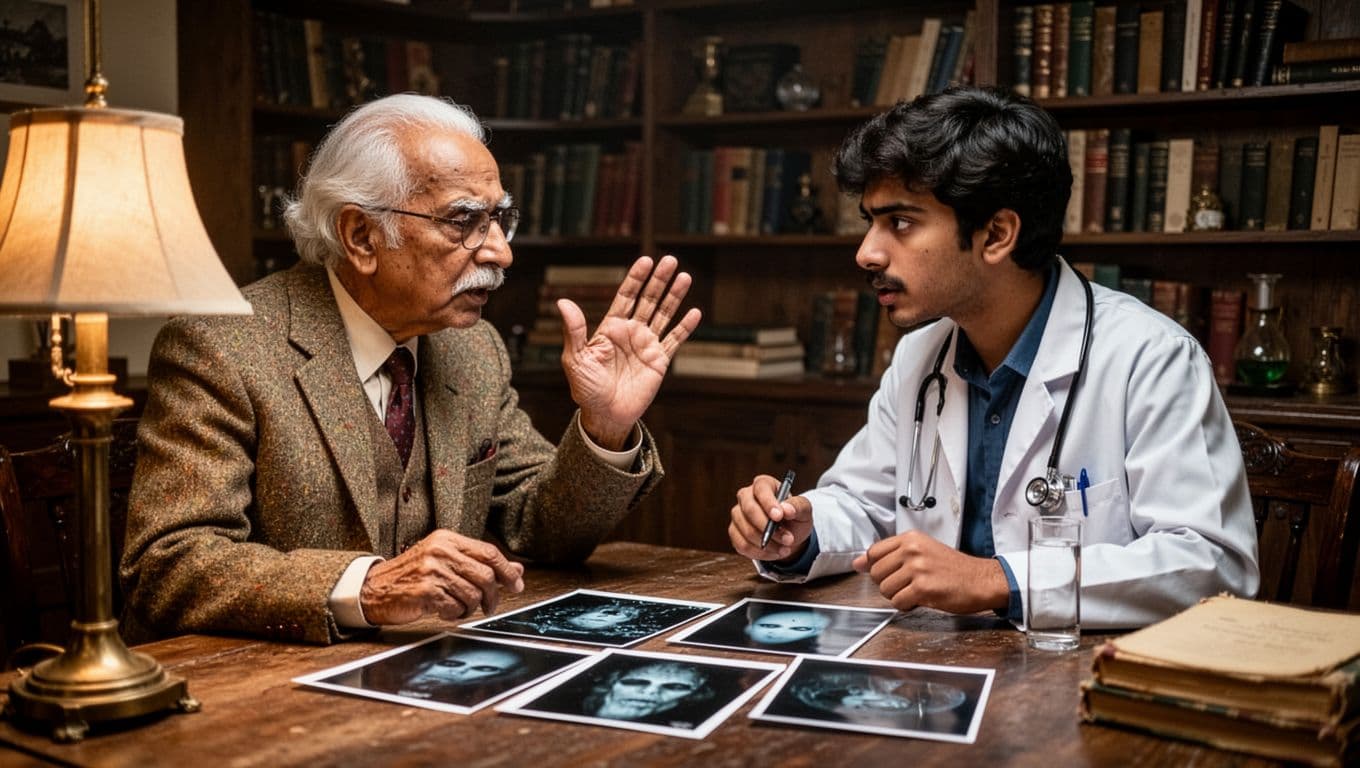
That setup stays grounded because it plays like a set of experiments. Yogi gathers observations, checks timelines, recreates conditions, and watches for inconsistencies. The professor, meanwhile, acts like a quality-control filter. He doesn’t let Yogi wave away details just because they sound spooky. In other words, the mentor isn’t asking for disbelief, he’s asking for proof.
If you want quick background on Aditya Srivastav’s film and TV credits, his TMDB profile is a useful reference point.
When mysteries overlap: how the film links fear, belief, and motive
Eventually, the “paranormal” thread stops feeling separate from the three-faced mask murders. That’s where the film’s theme clicks: belief can be weaponized. A frightened crowd becomes cover, and a loud rumor can drown out a quiet fact.
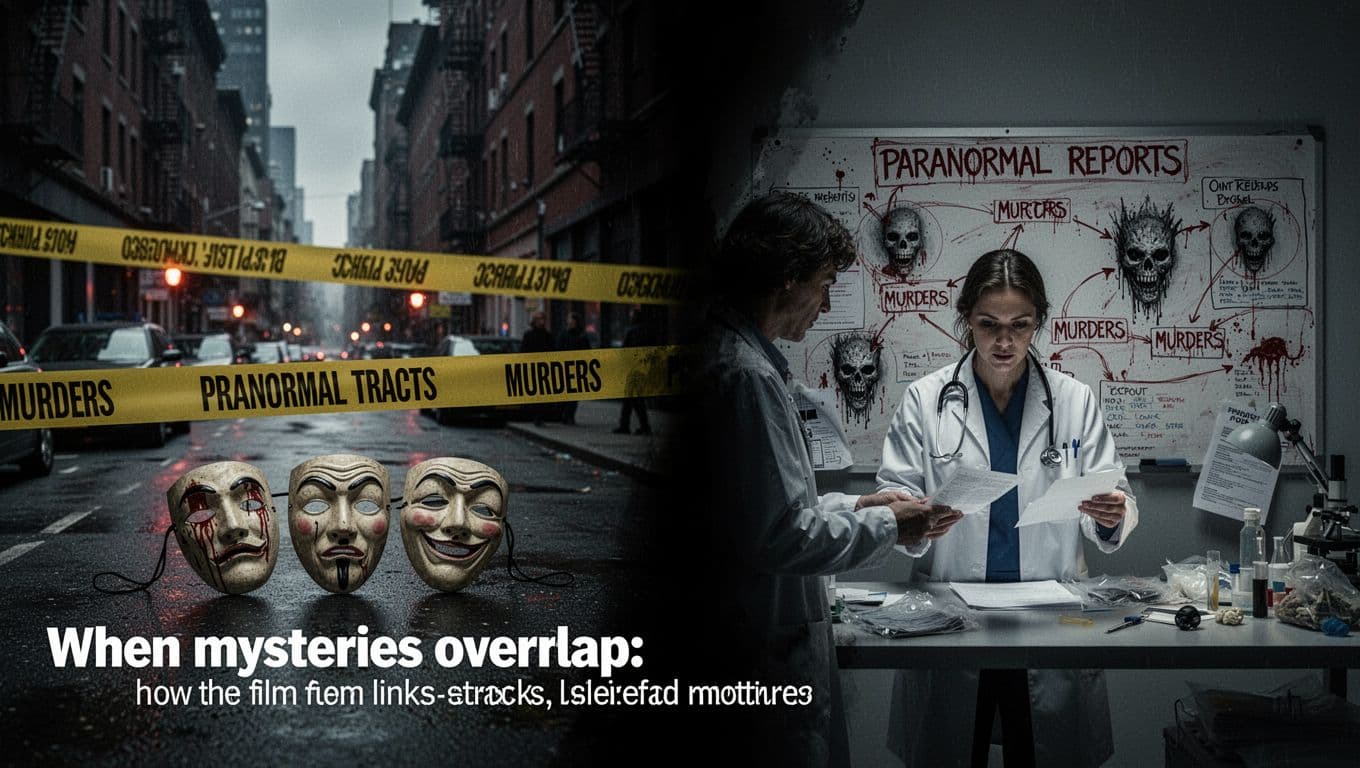
At a high level, Trimukha suggests a few chilling possibilities without turning it into fantasy:
- Rumors can hide human motive, because everyone chases the “ghost” instead of the person.
- Criminals can exploit superstition, planting signs and symbols to steer attention.
- Witnesses can reshape memories, since fear makes people fill gaps with what they’ve heard.
That tension matters during an active serial-killer hunt. Shivani needs clean leads and fast decisions, yet public belief keeps muddying the water. Yogi, on the other hand, keeps asking what can be verified, even when the city wants a supernatural answer.
For a broader, spoiler-light sense of how the film blends crime and belief, The Hans India’s overview mirrors the same central conflict: logic versus superstition, with real lives on the line.
Cast and crew check: performances, direction choices, and the film’s big swings
Trimukha works best when it trusts its people. The film asks a lot from its cast because it keeps switching lanes between a grounded CID hunt and a rationalist track that flirts with the paranormal. That’s a tricky balance, and it’s where director and writer Razesh (Rajesh) Naidu takes his biggest swings.
Behind the camera, the project also feels like a passion build. Producers Sridevi Maddali and Ramesh Maddali back it under Akhira Dream Creations, and you can see the intent to mount a bigger, multi-thread thriller. Not every choice lands cleanly, but the attempt is clear: keep tension high while stacking reveals.
Performances that keep you watching, even when the plot gets busy
Sunny Leone’s Shivani Rathod has the kind of screen presence that holds a frame. Even in crowded scenes, your eyes track her because she stays controlled. That restraint fits a CID officer who can’t afford to panic. When the story piles on clues and misdirection, she becomes the anchor that keeps the investigation feeling human.
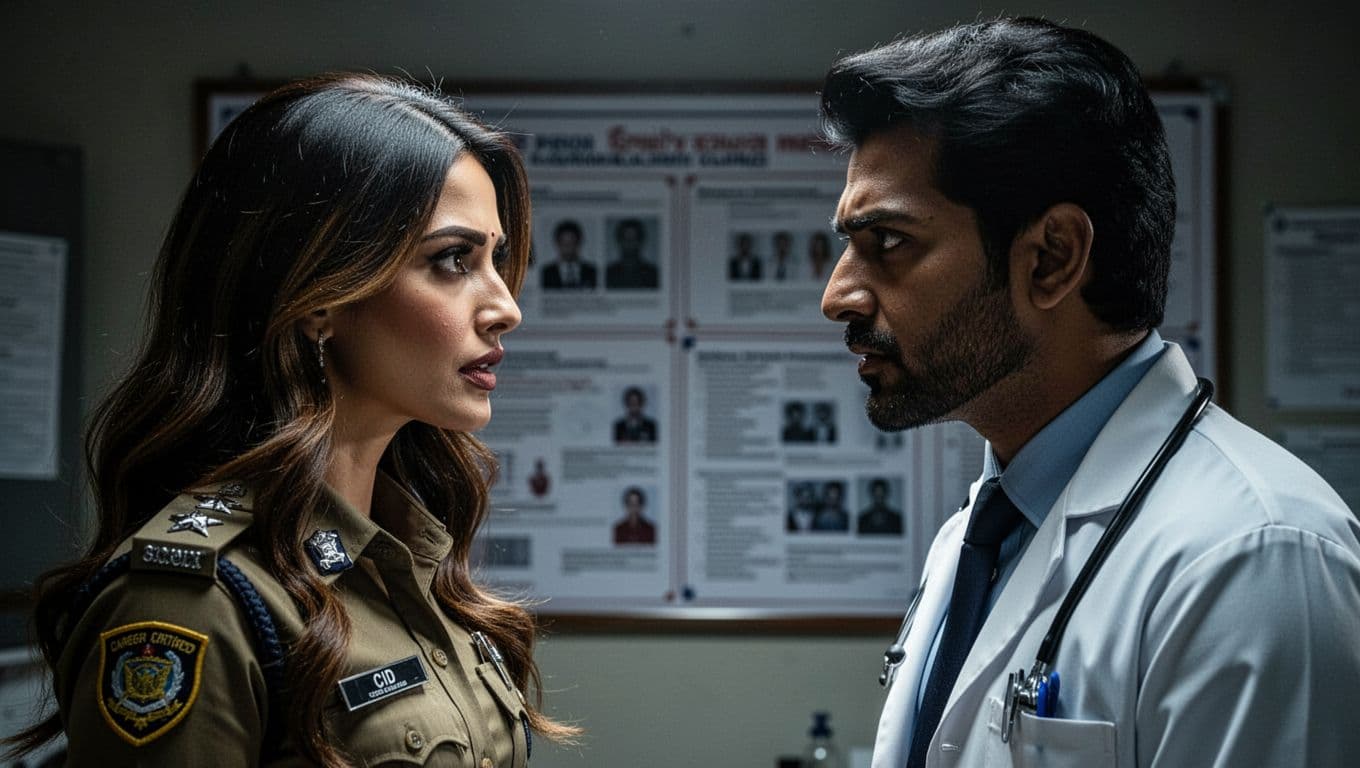
At the same time, the role demands authority, not just intensity. Some scenes land better than others, especially when Shivani has to shift from calm interrogation to action-mode urgency. Still, she commits, and that commitment matters in a thriller that never wants you to look away.
Yogesh Kalle, as the rational investigator (Dr. Yogi), plays the counterweight. His performance leans into method and clarity, like someone solving a puzzle with a ruler instead of instinct. That approach gives the film a useful rhythm: Shivani fights pressure in the field, while Yogi slows things down and asks what can be proven. If you want a quick sense of how reviews frame the two leads, Sakshi Post’s review summary captures that push-pull dynamic.
The supporting cast helps the movie keep its tone from turning flat. Akriti Agarwal adds energy in the more commercial beats (including song moments), which can act like a pressure release valve. Shakalaka Shankar pops in as occasional relief, and that’s useful because nonstop dread can numb an audience. The best supporting turns don’t “do comedy,” they simply let the film breathe before it tightens the screw again.
When a mystery gets busy, the cast has one job: keep you oriented. Trimukha often succeeds because its leads feel distinct, even when the plot gets loud.
Direction and screenplay: ambitious non-linear storytelling (and the risk of confusion)
Razesh (Rajesh) Naidu directs Trimukha with a clear taste for non-linear structure. In plain terms, the movie runs on two tracks, Shivani’s CID chase and Yogi’s rationalist cases, then it cross-cuts between them. Add shifts in time and viewpoint, and you get layered reveals that try to reframe what you thought you knew.
When it works, it feels like turning a Rubik’s Cube. A small detail from one track suddenly explains a behavior in the other. That’s the good version of the film’s design, and it’s also why the first stretch can feel gripping. The premise has enough juice to support the experiment, as also noted in The Hans India’s take on the film’s ambition.
Still, the same structure creates real risk. Because the movie keeps adding threads, some viewers found the later portions stretched or confusing, especially when reveals arrive close together. The film sometimes trades clarity for surprise, and that can backfire in a whodunit. If the audience is busy remembering “when” a scene happens, they stop tracking “why” it matters.
A tighter approach could have kept the ambition while reducing friction:
- Fewer repeated beats (one strong chase sequence can replace two average ones).
- Cleaner handoffs between tracks, so each jump earns its place.
- More breathing room after reveals, because big twists need a second to land.
Cinematography, editing, and music: what adds to the mood, what breaks it
The visuals aim for a tense, shadow-heavy look, which fits a masked-killer story. Many scenes sell the feeling of a city on edge, especially when the camera stays patient and lets you scan the frame. However, some night sequences look underlit, and that can blur important action or clues. In a mystery, murky lighting is not just a style choice, it can become a comprehension problem.
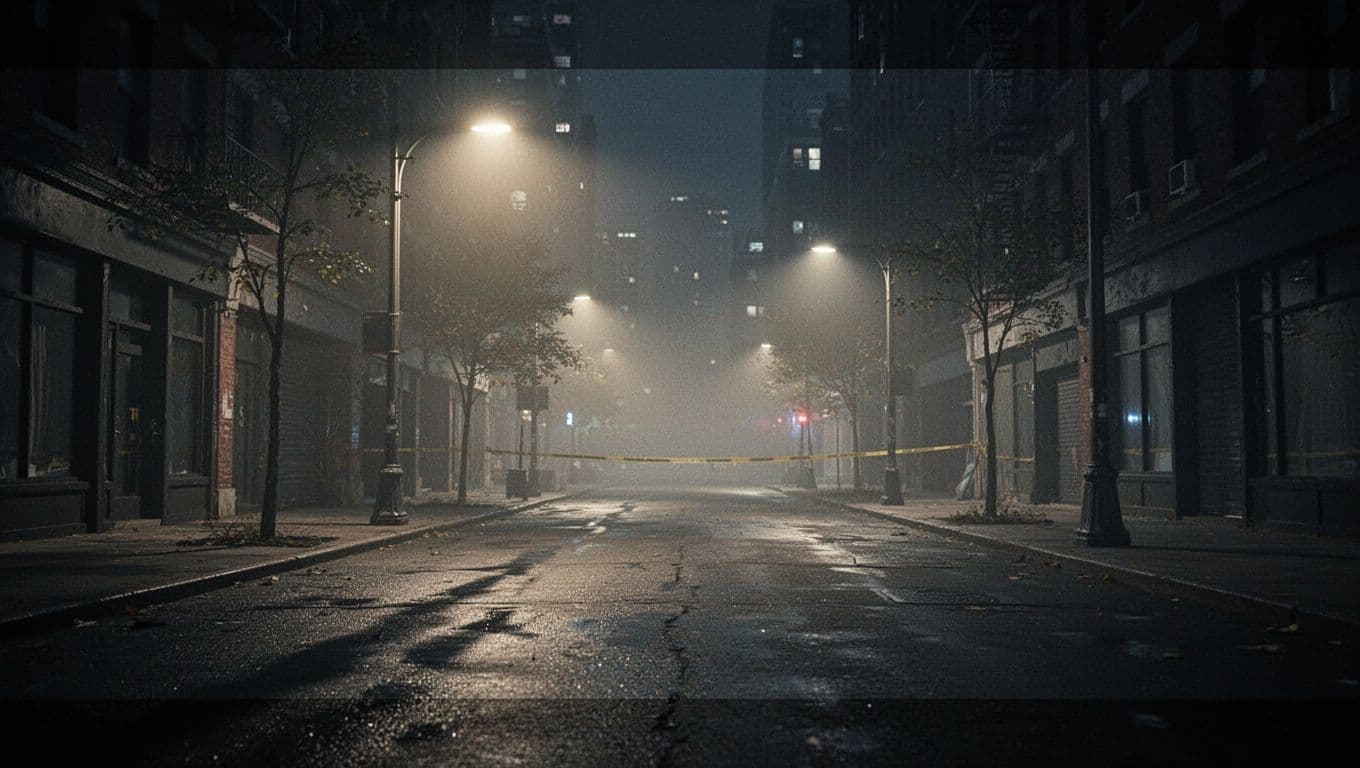
Editing is where pacing either sharpens the blade or dulls it. Here, the cut sometimes lets scenes run a bit long, which adds to the “busy” feeling in the second half. A non-linear thriller depends on crisp scene endpoints. If a moment keeps going after you got the point, tension leaks out.
Musically, Vinod Yajamanya’s songs are generally pleasant and help reset the mood between darker stretches. The background score, though, can feel heavy, as if it’s pushing you to feel anxious even when the scene already sells it. When the score eases up, the suspense often plays better because the silence does part of the work.
In short, Trimukha has the bones of a mood-first thriller. It just needs cleaner lighting in key night beats, tighter edits, and a lighter hand on the score to keep the mystery sharp.
Release details, audience buzz, and whether Trimukha is worth your time
Trimukha hit theaters worldwide on January 30, 2026, after an earlier planned 2025 release got pushed back. Filming reportedly began in early 2025 and wrapped in September 2025, with post-production carrying it across the finish line later in 2025.
That timeline matters because you can feel the movie’s ambition. It wants to be a serial-killer procedural, a rationalist puzzle, and a “what if it’s paranormal?” story, all at once. There’s also been talk around the film using AI-assisted visuals in a flashback scene, which plays more like a quick stylistic choice than the main draw.
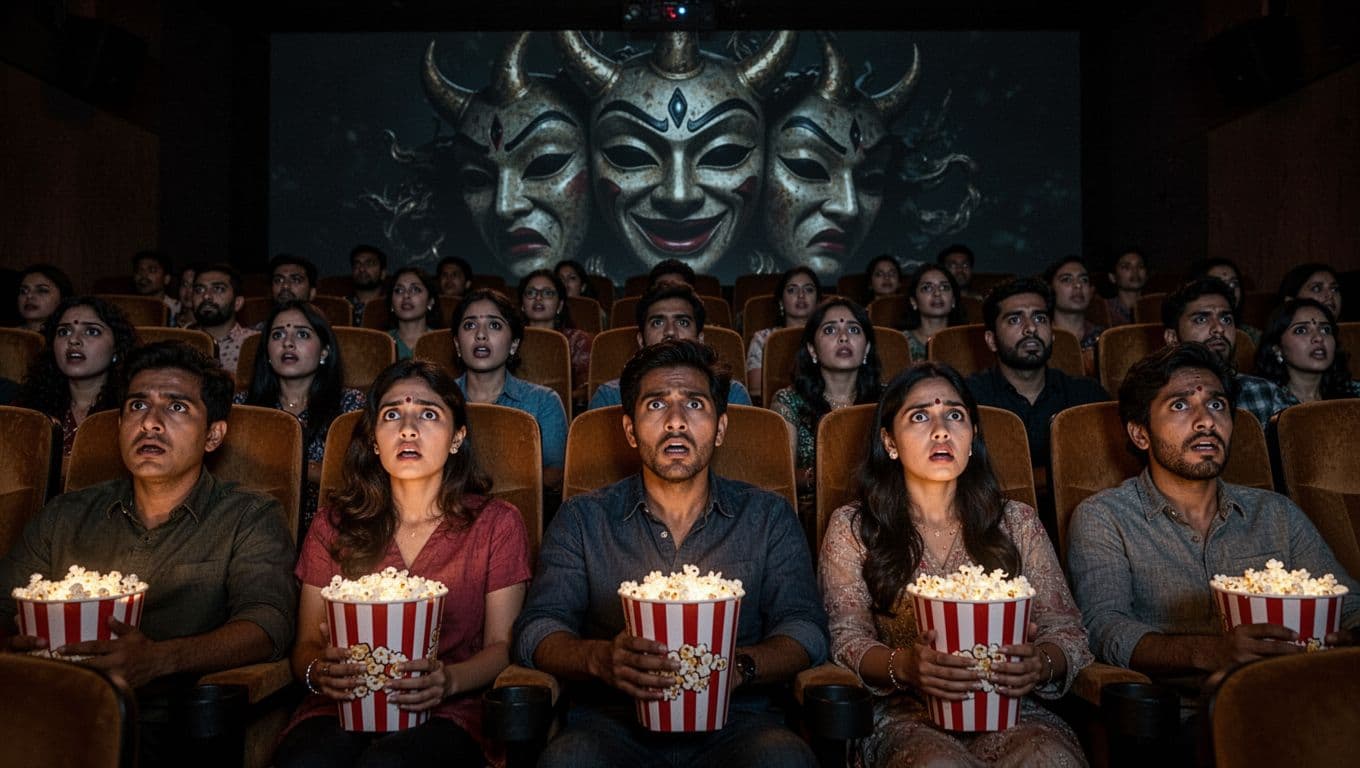
Where it lands with viewers: mixed reviews, strong curiosity, and word-of-mouth
The general read so far is mixed to positive. Viewers who click with the premise tend to praise the core concept (the three-faced mask cases and the logic-versus-belief tension) and highlight the leads for keeping the story watchable even when it gets busy. Sunny Leone’s controlled, no-nonsense energy as Shivani Rathod often gets mentioned as an anchor.
On the other hand, the same people who like the idea can still bump into the execution. Pacing is a common sticking point, especially when the film stacks threads on top of each other. The screenplay can also feel complicated, not because the clues are “smart,” but because the movie occasionally asks you to hold too many timelines and motivations at once.
What helps the buzz is that theater chatter sounds strong. In other words, it plays well as a shared watch where reactions carry you through the slower stretches. If you want a quick snapshot of the reception mix, Sakshi Post’s review coverage lines up with the idea of “good hook, uneven flow.”
If you enjoy talking through theories after a show, this is the kind of mystery that gives you plenty to argue about.
Best for fans of layered mysteries, less for those who want simple thrillers
Trimukha fits best if you like mysteries where the answers feel earned, not handed to you. Think of it like a corkboard case file, not a straight line chase.
You’ll probably have a good time if you enjoy:
- Serial-killer puzzles with patterns, signatures, and misdirection.
- Rational explanations for scenes that look supernatural at first.
- Twists that reframe earlier moments, instead of only adding new suspects.
However, it’s not ideal for everyone. If you dislike split storylines, or you want a lean, simple thriller with one clean investigation track, parts of this movie may test your patience. A few slower stretches can feel like waiting for the plot to “catch up” to its own idea. For another perspective on its ambitious structure, The Hans India’s overview reflects that same push and pull.
Quick viewing tips to enjoy it more (no spoilers)
A little mindset shift makes Trimukha easier to enjoy. Treat it like a blended mystery where details matter, and the movie improves.
Here are a few spoiler-free tips that help:
- Lock in names early, especially investigators and repeat witnesses.
- Track mask-related details, where it appears, who finds it, and what changes around it.
- Watch the “paranormal” moments like a stage trick, asking what a person could control.
- Stay patient during setup, because later reveals lean on early scenes.
Bottom line, watch Trimukha if you like layered crime stories and don’t mind doing a little homework as you go. If you only want a simple, brisk thriller, this one might be a skip.
Conclusion
Trimukha (2026) lands best when it sticks to its two-track hook, CID officer Shivani Rathod chasing a serial killer who hides behind the three-faced mask, while Dr. Yogi cuts through the panic with facts and tests. Because the case keeps slipping away, Shivani’s hunt carries real urgency, and the mask’s symbolism fuels the city’s fear. Meanwhile, Yogi’s rational method keeps the story grounded, even when scenes flirt with the paranormal.
Still, there’s a clear tradeoff. The movie’s ambition brings twists and big swings, yet it also invites pacing dips and a few clarity issues once the threads pile up.
Thanks for reading, if you enjoy dual-track mystery thrillers and you like talking theories after the show, put Trimukha on your watchlist and share your take on what the mask really means.