
Movie Reviews
Rakshasa Movie Review: Prajwal Devaraj Battles Demons and Time Loops

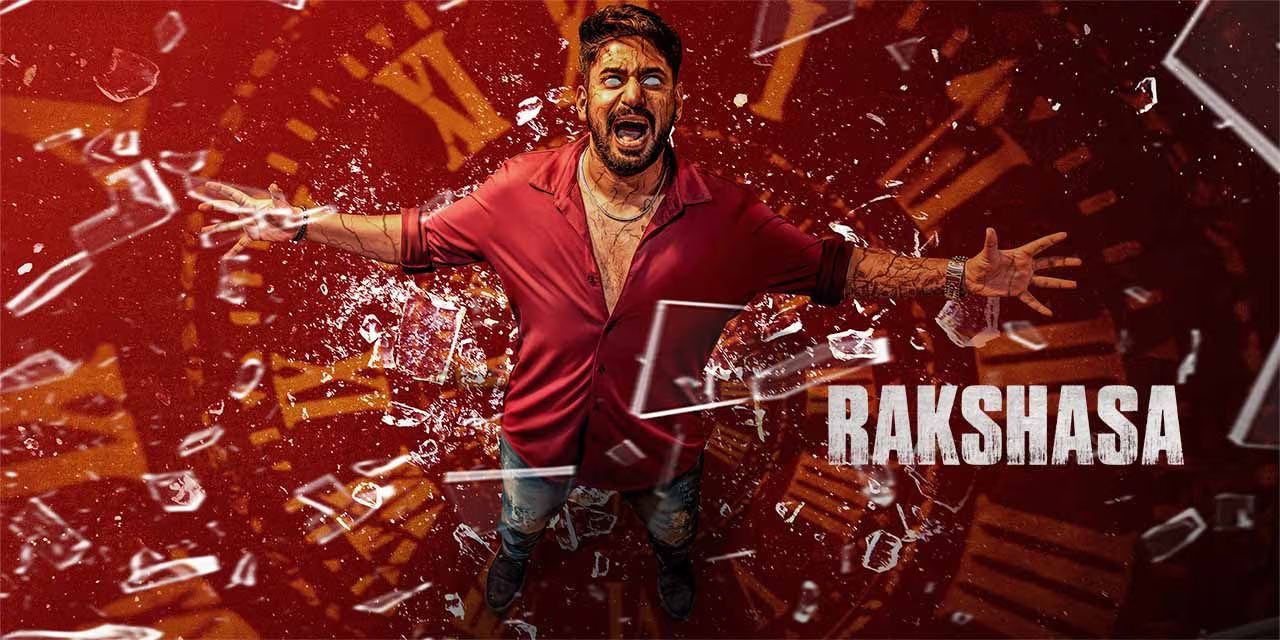
Kannada cinema has been mixing genres more often in recent years, and it’s helped the industry stand out. Director Lohith H’s Rakshasa (2025) takes a big swing with a tricky combo. It blends old demon folklore with a time-loop setup. Released in theaters on March 7, 2025, this Kannada-language horror thriller stars Prajwal Devaraj as a man forced to survive the same nightmare again and again.
The idea has earned the film attention, and Devaraj’s work has drawn steady praise. Still, many reviews also point to problems that hold it back, like uneven scares, choppy editing, and moments that feel funny when they shouldn’t. Here’s a clear look at what works, what doesn’t, and where Rakshasa fits in today’s Kannada horror movies.
Plot Summary: A Suspended Cop Trapped in One Terrifying Night
Rakshasa follows Satya (Prajwal Devaraj), a police officer on suspension who’s already dealing with a rough stretch in life. He ends up at a lonely railway station with three suspects in custody. The setting feels tight and isolated, and that pressure builds fast.
Then a strange trunk becomes the center of the problem. During a solar eclipse, it opens by accident and releases the spirit of a Brahmarakshasa, a bloodthirsty demon tied to old folklore. From there, the night turns violent and chaotic.
Soon, Satya realizes he’s stuck in a time loop. He keeps reliving the same night, and every reset brings fresh danger. At the same time, the loop pushes him toward hidden truths, past mistakes, and a growing fear that the curse won’t end. The film mixes myth-based horror with a tense, psychological edge, and it suggests that guilt and violence can echo across time.
Lohith H, who also made Mummy Save Me, works with a setup that feels familiar to fans of time-loop stories, but he grounds it in Indian demon lore. The movie runs about two hours and mixes suspense, supernatural horror, and character drama.
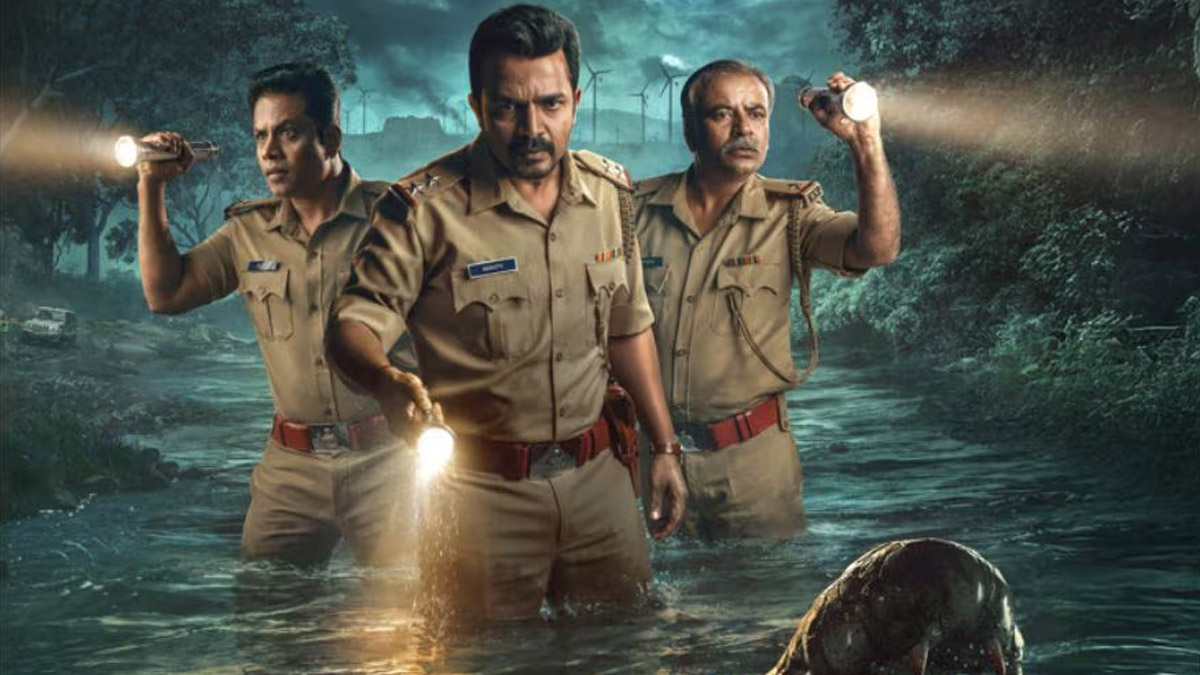
Performances: Prajwal Devaraj Keeps It Together
Prajwal Devaraj gives Satya a steady, believable core. That matters because the story throws a lot at the audience. He sells the fear and panic, but he also shows grit as Satya runs, fights, and tries to outthink the loop. Just as important, he plays the emotional weight well, especially when the character hits a wall and still has to keep going.
The supporting cast includes Sonal Monteiro, Arna Rathod, and others in smaller parts. They do what the story needs, although the film stays focused on Satya for most of its runtime. In the end, Devaraj remains the clearest strength, mainly in scenes that demand both vulnerability and intensity.
Direction and Technical Work: Big Ideas, Uneven Results
Lohith H deserves credit for taking a risk. Time-loop horror is not common in Indian cinema, and Rakshasa does land a few scary set pieces once the demon enters the story. The cinematography also helps, using the railway station’s closed-in spaces to build tension. Low light, deep shadows, and eclipse visuals add to the mood.
However, the film stumbles in execution. Several critics have pointed to rough editing and post-production. Because of that, some loop moments feel repetitive without adding new dread each time. On top of that, parts of the screenplay feel unclear, and the time-loop rules don’t always hold together. In a few scenes, the demon effects look weak, which softens the horror and sometimes turns tense moments into accidental comedy.
The sound design and background score try to push the fear higher. Still, pacing issues get in the way. The movie opens like a more commercial setup and then shifts hard into horror. For some viewers, that switch works. For others, it feels shaky.
What Works Best
- A fresh mix of time-loop storytelling and Brahmarakshasa mythology
- Prajwal Devaraj’s strong lead performance
- A creepy setting that supports the horror
- Several effective scare scenes once the story hits its stride
- Themes around guilt, repeated suffering, and evil that won’t fade
- Less focus on flashy hero moments, more on survival and desperation
Where It Falls Short
- Scares vary in quality, and some CGI looks unconvincing
- Editing and writing issues create confusion and slow the momentum
- A few scenes land as unintentionally funny, which breaks the tension
- Some plot points don’t get clean answers
- The time-loop logic feels thin compared to stronger examples worldwide
Reception and Ratings Snapshot
After release, Rakshasa received mixed-to-average reviews:
- The Times of India (Sridevi S.): 3/5 stars, praised Devaraj and the engagement despite flaws
- Times Now (Shashiprasad SM): 3/5 stars, liked the scary moments, noted it may not suit viewers wanting simple thrills
- New Indian Express: called it a solid horror experiment with a new twist
- Deccan Herald: 2/5 stars, criticized the uneven editing and logic gaps
- OTTplay: pointed to a lack of strong scares and moments that felt unintentionally fun
- IMDb user average: around 3.0/10 from limited ratings
Audience reactions also split. Horror fans often appreciate the attempt and the concept. Meanwhile, more mainstream viewers tend to find it messy or underwhelming.
Verdict: A Bold Kannada Horror Experiment That Doesn’t Fully Stick the Landing
Rakshasa wants to do something different, and that alone makes it worth talking about. The mix of Brahmarakshasa legend and a time-loop structure gives the film a hook that feels new for Kannada horror. Prajwal Devaraj’s performance also makes the journey easier to follow, even when the movie gets noisy or uneven.
Still, technical flaws and inconsistent writing keep it from reaching its full potential. It won’t satisfy everyone, especially viewers who want clean logic and steady scares. Yet for fans of myth-based horror, time-loop stories, or Prajwal Devaraj, it’s a watchable and interesting swing, best enjoyed when you’re in the mood for something strange, tense, and a little rough around the edges.



